
Interactive Tool Try the Film Studio →
Call (610) 735-7064
Get an Instant Estimate
Mon to Fri · 9AM to 5PM
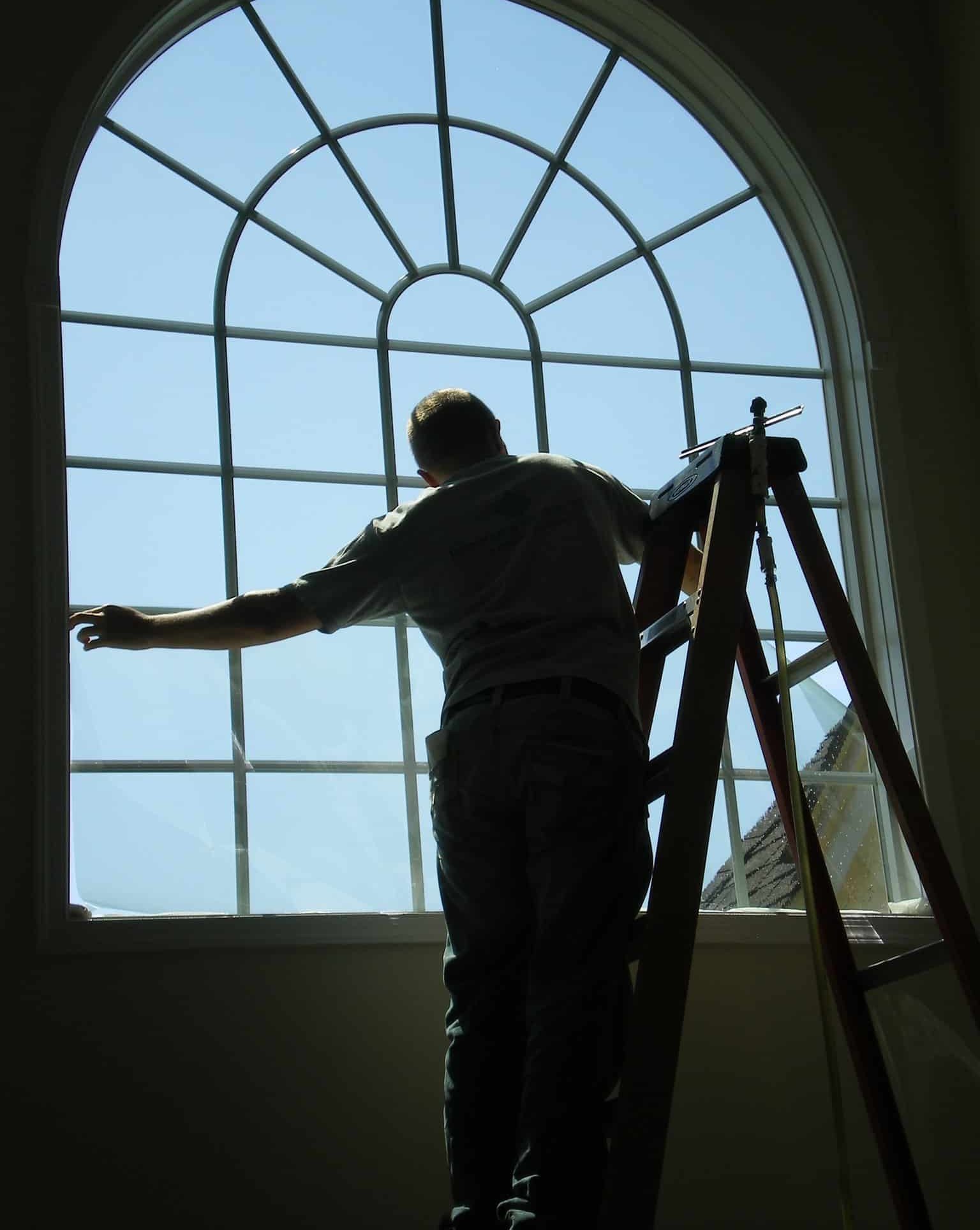
Doylestown homeowners gain a meaningful deterrent against forced entry through glass windows and doors without replacing existing windows
You lock the front door every night. You have a good deadbolt. Maybe you've even added a video doorbell. But the glass in your windows and back door? That's still standard single-pane or insulated double-pane, and most of it would give way to a determined intruder in under thirty seconds. It's a quiet vulnerability that a lot of Doylestown homeowners haven't fully thought through, and it doesn't take a break-in to make the problem real. A bad nor'easter pushing debris through a living room window, a summer storm sending a branch into your dining room glass, afternoon sun cooking your hardwood floors for twenty years — these are the same windows, the same problem, just different forms of it.
Security window film addresses all of it without replacing your windows, altering the look of your home, or requiring a contractor to gut anything. For homes in and around Doylestown Borough, including properties in historic districts where visual changes draw scrutiny, film is often the most practical upgrade available. Sun Control Specialists has been installing Solar Gard and Armorcoat film on residential and commercial glass across Bucks County for over 27 years. Here's what you need to know before you decide.
Security window film doesn't make glass unbreakable, but that's not the point. What it does is hold shattered glass in the frame after impact, creating a barrier that costs an intruder significant time to get through. Most opportunistic burglars rely on speed and quiet. A window that shatters cleanly gives them both. A window with security film gives them neither.
When standard glass breaks, the fragments fall away immediately, leaving an open hole. Film-backed glass holds its shape even after the pane cracks, because the adhesive layer bonds the fragments together. An intruder then has to push through or cut away a sticky, jagged, resistant sheet rather than stepping through open air. In many cases they don't bother. They move on to easier targets.
This matters specifically in Doylestown because single-family homes here often have glass sidelights next to front doors, large rear sliding doors, and ground-floor windows with direct yard access. Those are exactly the entry points burglars favor. The film addresses each of them without bars, grilles, or anything that changes how the house looks from the street.
One quick step you can take today: walk your home's perimeter and note every ground-floor glass opening that a person could reach without a ladder. That list is your priority window list for a film consultation.
Bucks County's storm calendar is worth taking seriously. Nor'easters in late winter and early spring, summer thunderstorms with wind gusts that send debris across yards, periodic high-wind advisories from mid-Atlantic systems — Doylestown sits squarely in the path of all of it. When windborne debris strikes a standard window, the glass sprays inward. That's the moment when someone standing in the kitchen or living room takes a laceration from their own window.
Security film acts as a retention layer, keeping broken glass attached to the film rather than projecting into the room. The pane may still crack. The film is not designed to prevent breakage. But the fragments stay in the frame, or at minimum fall as a single attached sheet rather than as individual shards traveling at speed into your living space.
For homes with large picture windows, sunrooms, or any glass adjacent to mature trees, this is a genuine safety upgrade. It's also one that requires no change to your home's structure or appearance. The film is optically clear. Your neighbors won't know it's there.
A practical step you can do right now: check the trees within striking distance of your windows. Any large limb over a significant glass opening is a real risk during a storm. Security film won't save the glass, but it can protect the people inside from what happens when that glass breaks.
Professional-grade security film is optically clear and essentially invisible from inside or outside the home. This is not the darkened tint people associate with car windows or commercial storefronts. It's a thin, clear polyester layer adhered to the interior surface of your existing glass. From the street, the windows look exactly the same. From inside, the view is unchanged.
For Doylestown Borough homeowners near the historic district, or anyone with an older property where architectural character matters, this distinction is critical. Bars and security shutters alter the appearance of a home permanently and visually. Replacement glazing with laminated or tempered security glass involves removing and resetting entire window units. Film changes nothing visible.
That said, if your property falls under a historic preservation overlay or you're subject to borough guidelines, it's worth confirming what's permitted before any exterior or interior modification. Sun Control Specialists can help you think through that conversation and provide documentation on what's being installed. The short answer for most homes is that clear security film raises no preservation concerns because it's not a visible alteration, but local requirements vary and confirming is always worth the five-minute phone call.
If you want some light control or privacy alongside security, there are film options that add a slight tint or a reflective quality. Those are separate conversations depending on what the room needs.
The most common mistake is treating security film as a DIY project. Consumer-grade film rolls are available online and look similar to professional product at a glance. The difference shows up at installation and under impact. Professional film is thicker, bonded with a more aggressive adhesive, and available in grades that significantly outperform anything sold for residential self-install. More important, the installation technique matters as much as the product.
Edge sealing and anchoring are where professional installation separates from DIY application. A film that's properly anchored to the window frame transfers impact energy into the frame rather than peeling away from the glass edge. Without that anchoring, the film can detach under force, defeating most of its purpose. Getting the edges right requires proper tools, the correct attachment materials, and experience reading how each window is constructed. There's no shortcut that produces a comparable result.
The second misconception is that any film works for any window. Glass type, thickness, existing coatings, frame construction, and window age all affect which film is appropriate and how it should be installed. Older single-pane glass in a historic Doylestown home is a different installation context than a modern double-pane unit in a newer development in Buckingham Township. Sun Control Specialists assesses each situation before recommending a film grade.
Third: homeowners sometimes assume security film handles UV protection and heat reduction automatically. Some films do combine these functions. Others are clear safety films with no solar performance at all. If your goals include both security and UV protection, those requirements need to be stated upfront so the right product gets selected for your specific exposures.
Start by identifying what problem you're actually solving. Security against forced entry, storm debris retention, UV protection for interior furnishings, and heat reduction are related but distinct goals, and different film grades address them differently. A homeowner primarily concerned about a south-facing sunroom fading hardwood floors may need a different product than one focused on reinforcing ground-floor entry points against intrusion.
Here's a simple way to think through it:
Spring and early fall are the best times to schedule installation in Doylestown. Film adhesive cures most reliably in moderate temperatures, and getting the installation done before summer heat or winter cold stress the glass gives the film the best start. Scheduling now means you're protected before the next storm season arrives.
Doylestown sits at an interesting intersection of old and new. The borough has genuine 18th and 19th century residential architecture, National Register properties, and blocks of historic streetscape that matter to the people who live there. It also has newer subdivisions in the surrounding townships, modern homes with large glass expanses, and a mix of property types that don't all have the same vulnerabilities.
What they share is the same regional weather and the same basic glass problem. Standard residential glazing is not designed to hold together under impact. It never was. The assumption was always that broken windows were a nuisance problem, not a safety or security issue. That's changed as homeowners have become more aware of what a determined intruder or a severe storm actually does to unprotected glass.
The Main Line has seen increased interest in security film for estates and high-value properties. Chester County homeowners ask about it for similar reasons. In Bucks County, the conversation is often triggered by a neighbor's break-in or a storm that put debris through a window on the street. Whatever prompts it, the underlying case is the same: film is the most cost-effective, least invasive way to change what happens when glass gets hit.
Sun Control Specialists serves the full Doylestown area and surrounding Bucks County communities. Our service area covers the townships and boroughs where these conversations come up most. We're not guessing at local conditions. We've been installing film on homes and businesses in this region for over two decades.
There are window film installers who treat every job as a quick residential tint and move on. That's not what this work requires. Security film installation demands proper product selection, correct film grade for the application, and professional anchoring technique that holds up under real-world conditions. Sun Control Specialists brings over 27 years of southeastern Pennsylvania experience to each project.
We install anti-intrusion security film using Solar Gard and Armorcoat products, both proven film lines with documented performance characteristics. We also handle decorative and UV-protective films when homeowners have multiple goals for the same window. Our work covers residential properties across Bucks County, including historic homes where installation protocol has to respect the existing glass and frame without causing thermal stress or adhesion failures.
We don't upsell film that a window doesn't need. If a standard safety film does the job, that's what we recommend. If the application calls for heavier security grade with frame anchoring, we say so and explain why. You can see examples of our work in our project gallery and read what clients have said in our reviews. The consultation is free. Request an estimate and we'll assess your home's specific windows and give you a straight answer on what makes sense.
Here's what matters: Security window film changes what happens when glass breaks, whether the cause is forced entry or storm debris. For Doylestown homeowners, it's the most practical, least invasive security and safety upgrade available for existing windows. Professional installation with proper film grade and edge anchoring is what makes the difference between a product that performs and one that peels off when it counts.
Your next step: Request a free estimate from Sun Control Specialists or call (610) 831-3602.
Quality professionally installed security film typically lasts 10 to 15 years on interior glass surfaces. Longevity depends on the film grade, the glass type, and whether the installation included proper edge sealing. Films installed by Sun Control Specialists using Solar Gard products carry manufacturer warranty coverage. Annual visual checks for edge lifting or bubbling help catch any adhesion issues early.
No. Security film is not designed to prevent glass from cracking under impact. Its function is fragment retention: keeping broken pieces bonded together so they don't fall away or spray inward. The difference between glass that shatters cleanly and glass that holds its shape after impact is the difference between a one-second entry point and one that takes significant additional effort to penetrate. That time delay is the security benefit.
Yes, with appropriate care. Older single-pane glass requires assessment before installation because some historic glazing is more susceptible to thermal stress than modern double-pane units. Sun Control Specialists has experience working on historic and estate glass in southeastern Pennsylvania and adjusts installation protocol accordingly. The goal is always to improve the window's performance without stressing the original glass or frame.
Routine cleaning is straightforward. Use a soft cloth or rubber squeegee with mild soap and water. Avoid abrasive cleaners or anything with ammonia, which can degrade the adhesive layer over time. For the first 30 days after installation, avoid heavy cleaning while the adhesive finishes curing. Beyond that, the film requires no special treatment and cleans the same way as unfilmed glass.
The installation process is low-disruption for most homes. Each window takes roughly 20 to 45 minutes depending on size and complexity. Furniture near the windows may need to be moved temporarily. There's no construction, no removal of existing windows, and no curing time that prevents normal use of the room. Most whole-home installations in Doylestown are completed in a single visit. The film may appear slightly hazy for the first few days as the adhesive finishes curing, then clears completely.