
Interactive Tool Try the Film Studio →
Call (610) 735-7064
Get an Instant Estimate
Mon to Fri · 9AM to 5PM
Homeowners gain a clear, practical understanding of how sun control window film works, what performance levels to expect, and how to select the right...
It's a Tuesday afternoon in July. You're working from home in your Chester County colonial, and the sun is hammering the west-facing wall of windows in your office. The room feels like a greenhouse. You've got the blinds half-down, which kills your view of the backyard and leaves you squinting at your monitor anyway. Your AC has been running since 10 AM and the electric bill is going to show it. Sound familiar?
This is the situation most southeastern Pennsylvania homeowners and commercial property managers are dealing with by mid-summer. South- and west-facing glass that seemed like a selling point in October becomes a liability by June. And the usual fix, closing the blinds and cranking the AC, trades one problem for two others.
Window film is the practical answer. Not a dramatic renovation. Not a full window replacement. A professionally installed film that stays on the glass, rejects heat, kills glare, blocks UV, and lets you keep the view. If you've been curious about how it actually works, what the options are, and whether the cost makes sense for your property, this is the guide for you. Sun Control Specialists has been doing this work across the Main Line, Bucks County, Chester County, Montgomery County and Delaware County for over 27 years. Here's what we know.
Window film controls what your glass lets in, specifically solar heat, UV radiation, and visible glare, without blocking your view or darkening your rooms. That's the core function. Modern high-performance films are engineered to reject specific portions of the solar spectrum while maintaining natural light transmission at levels your eyes won't notice.
Solar heat enters your home or office in two ways: visible light that warms surfaces when it hits them, and near-infrared radiation that passes through glass and heats the room directly. Quality sun control films can block up to 79% of incoming solar heat through treated glass. That's not a marketing number. It's a measurable reduction in the thermal load your HVAC system has to handle on a 92-degree afternoon in August.
UV blockage is the other major function people underestimate. Professional-grade films block over 99% of harmful UV rays, which are the primary cause of fading in hardwood floors, Persian rugs, upholstery, artwork, and cabinetry. If you have south- or west-facing rooms that get long afternoon exposure, your furniture is aging faster than it should be. Film stops that without changing how the room looks.
Glare is the third issue, and it's the one that drives home office workers and commercial tenants absolutely crazy. The fix most people use, heavy drapes or blackout shades, eliminates the glare by eliminating the light entirely. Window film reduces glare significantly while keeping visible light transmission high. You can see your monitor. You can see your backyard. Both at the same time.
This isn't a seasonal solution either. In Pennsylvania's four-season climate, window film earns its keep year-round. In winter, certain film types improve thermal retention by reducing heat loss through the glass, which means your heating system runs less in January the same way your cooling system runs less in July.
The right film depends on three things: the orientation of your glass, what problem the room is actually having, and what you're willing to spend. Sun Control Specialists offers tiered options to match different performance requirements and budgets, so let's be specific about what each delivers.
At the top of the performance range is Nano Ceramic film. This is Solar Gard's Nano Ceramic Hilite technology, and it's the best option for rooms with serious heat and glare problems. Ceramic films reject heat through nano-particle technology rather than metallic coatings, which means they don't interfere with cell signals, Wi-Fi, or GPS, a real concern in modern homes and commercial spaces loaded with wireless devices. The appearance is neutral to slightly tinted, and it looks clean on almost any architectural style.
Mid-range ceramic film gives you strong heat and UV rejection at a lower price point. Performance is solid across most residential and light commercial applications. For rooms that face east or north, where solar exposure is moderate, this tier often makes more sense than the premium option.
Dual reflective film is the entry-level option and works well for commercial applications where some exterior reflectivity is acceptable and budget matters. It's not the right choice for historic homes where preservation standards restrict visible alterations to window appearance, but for many commercial storefronts and office buildings in the region, it performs reliably.
Window orientation matters more than most people realize. South-facing glass in southeastern Pennsylvania gets direct sun for the majority of the day from spring through fall. West-facing glass gets the most intense afternoon heat load. East-facing glass has morning exposure but generally moderate heat gain. North-facing glass rarely needs heat rejection film. Your window film installation should be scoped based on which elevations of the building actually have a problem, not as a whole-house blanket treatment.
The biggest misconception is that window film makes rooms dark. This was partially true of older reflective films from the 1980s and 90s. Current technology is different. High-performance films are engineered to be nearly invisible or subtly tinted while still rejecting substantial solar heat. You won't walk into a room and feel like you're in a cave. The glass looks like glass.
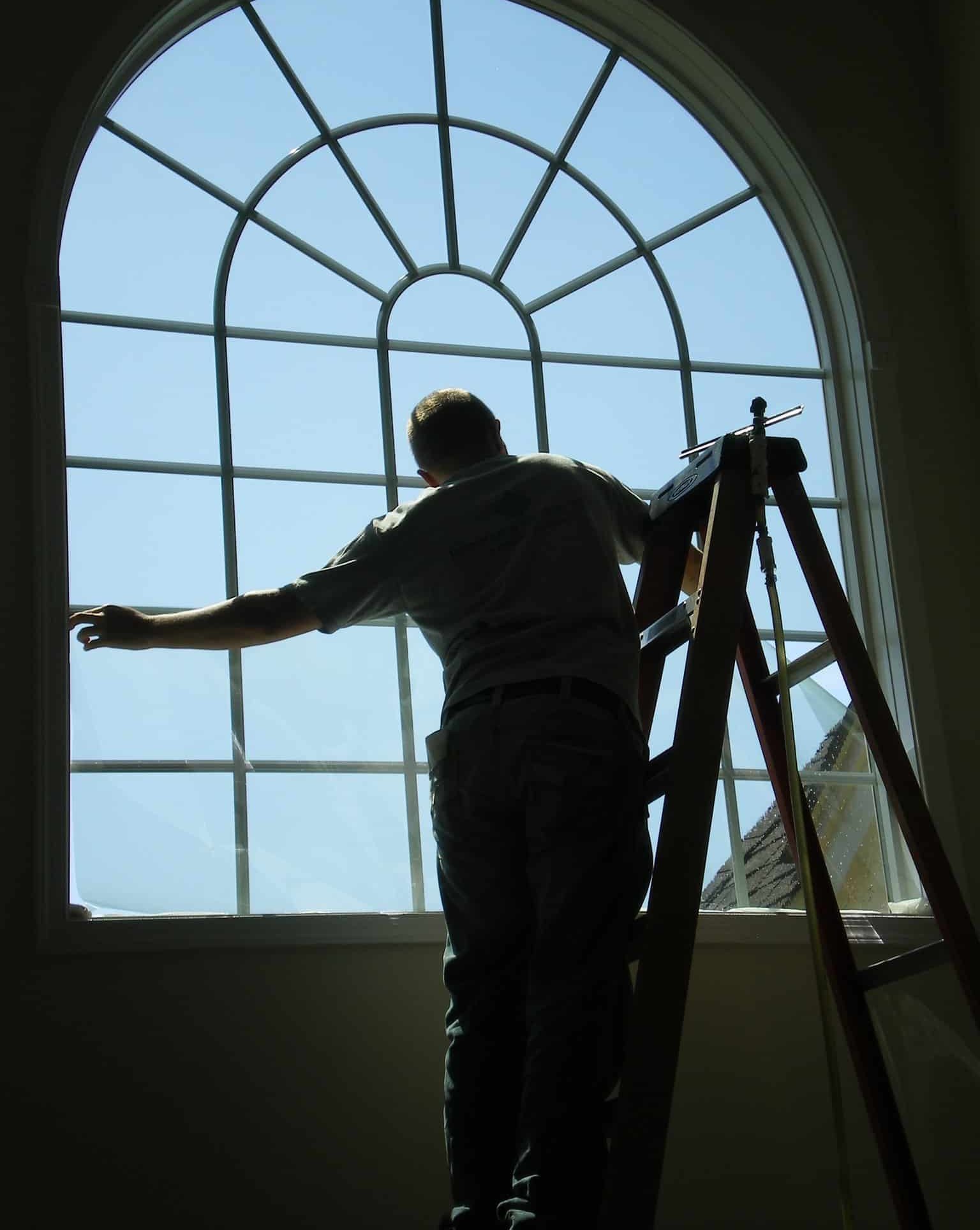
The second mistake is treating this as a DIY project. Film application looks simple on YouTube. In practice, getting a clean, bubble-free, adhesion-perfect installation on large panes of glass requires professional tools, a controlled environment, and technique that takes years to develop. Common DIY failures include bubbling that appears days after install, edge lifting from improper trimming, and film that clouds over time due to moisture trapped during application. A botched DIY install doesn't just look bad. It can void the warranty on the film entirely.
Speaking of warranties: Solar Gard carries a limited lifetime warranty on residential solar and safety films, but that warranty is only valid when installed by a certified installer. Sun Control Specialists is a certified Solar Gard installer, which means your film is covered and the installation meets manufacturer specifications. If you find a cheaper installer who isn't certified, you may be getting the film without the protection the warranty provides.
Another thing buyers overlook is the difference between window film and window replacement. Window film is not a substitute for severely failed or damaged glass. But for windows that are structurally sound and performing normally except for heat and glare issues, film is dramatically less expensive than replacement and delivers the specific benefits you actually need. You don't need new windows to fix a heat problem. You need the right film on your existing glass.
One more overlooked factor: historic glass. Southeastern Pennsylvania has a significant inventory of older homes, particularly on the Main Line and in Bucks County, with original or period glass that can't be treated the same way as modern float glass. Thinner, less uniform historic glass requires a conservative installation protocol and film selection. At Sun Control Specialists, we've handled these installs for decades. The approach is different, and it should be.
If your rooms are uncomfortable during Pennsylvania summers despite running your AC, if your furniture and floors are showing signs of fading, or if glare is making screens unusable during daylight hours, window film is almost certainly worth a professional assessment.
Here are three things you can do right now, before calling anyone, to assess your situation:
Bring those observations to your consultation. A good installer will ask about room use, occupancy patterns, window orientation, and any HOA or historic preservation requirements before recommending a film. If an installer quotes you without asking those questions, that's a red flag.
Timing matters too. Installing film in spring, before temperatures climb into the 80s and 90s, means you get the full benefit for the entire cooling season. Scheduling in August means you've already paid for a summer of discomfort. Spring is the practical window for maximizing return on investment in this region.
Pennsylvania's climate is more demanding on window film than people expect, and the architectural character of southeastern PA adds another layer of complexity that generic national advice doesn't address.
The region gets genuine four-season pressure. Summers are hot and humid, with sustained periods above 85 degrees that push HVAC systems hard. Winters are cold enough that thermal retention through glass matters. A film that only helps in summer is leaving value on the table. Solar Gard films are selected and specified for year-round performance, which is the right approach for this climate.
The service area Sun Control Specialists covers includes some of the most architecturally distinctive residential stock in the state. Main Line neighborhoods are full of older stone homes, large casement windows, and in some cases original glass. Chester County has working farms and estates with historic outbuildings that have their own preservation considerations. Bucks County has significant inventory of older homes where window appearance is part of the neighborhood character. Delaware County has a mix of mid-century commercial buildings and residential neighborhoods with active HOAs.
None of those situations call for the same film or the same installation approach. The local knowledge matters. An installer who primarily works in new construction or who is based three states away won't have the institutional knowledge to handle a historic sash window in Bryn Mawr or a south-facing commercial storefront in West Chester with existing reflective glazing.
Pennsylvania's sun angles also change significantly between seasons. A south-facing window that is shaded by an overhang in summer may get deep direct sunlight in winter when the sun is lower. Film selection and placement should account for that, not just the peak-summer scenario.
Sun Control Specialists has been installing Solar Gard window film across southeastern Pennsylvania for over 27 years. That's not a boast, it's a relevant fact: the region's building stock, climate, and local regulations require experience that only comes from doing this work here, in this market, on these buildings, over time.
We install Solar Gard and Armorcoat films across the full range of applications: residential window film for heat and UV control, anti-intrusion security film for glass that needs to resist forced entry or hold together after impact, and decorative film for privacy and aesthetic applications in homes and commercial spaces. Solar Gard's limited lifetime warranty on residential films is only valid through certified installers. We are one of them.
Most residential projects are completed in a single day with minimal household disruption. We work with historic glass, HOA-sensitive properties, and commercial buildings with occupied tenants. The right film for your property depends on the glass, the elevation, and what problem the room is actually having. That's the conversation we want to have before we recommend anything.
See what past customers have experienced on our reviews page and take a look at completed projects in our installation gallery.
Here's what matters: Sun control window film is one of the most cost-effective ways to make southeastern Pennsylvania homes and commercial buildings more comfortable, protect interior furnishings from UV damage, and reduce the cooling load on HVAC systems without sacrificing natural light or outdoor views. The right film, installed correctly by a certified professional, performs across all four seasons and carries a manufacturer-backed warranty.
Your next step: Request a free estimate from Sun Control Specialists or call (610) 831-3602.
Modern high-performance films are engineered to reject heat and UV while maintaining high visible light transmission. Most homeowners and commercial tenants report that rooms feel essentially the same in terms of brightness after installation. The film may have a subtle tint depending on the product selected, but the dramatic darkening people associate with older reflective films is not characteristic of current Solar Gard technology. Your installer should show you visible light transmission specs for any film being considered so you know exactly what to expect before the job starts.
Most residential projects in southeastern Pennsylvania are completed within a single day. A typical home with south- and west-facing windows on one or two floors can be completed without requiring you to vacate the property or disrupt your household significantly. Larger commercial projects or multi-story buildings may take longer depending on window count and access requirements. Sun Control Specialists will give you a realistic timeline before the project begins, not a vague estimate.
Window film provides benefits across all four seasons in Pennsylvania's climate. In summer, it reduces solar heat gain and cooling load. In winter, certain film types improve thermal retention by reducing heat loss through the glass, which lowers your heating costs. The year-round performance is part of what makes professionally installed film a practical long-term investment for this region rather than just a seasonal fix.
Yes, but it requires experience and the right approach. Historic glass is thinner and less uniform than modern float glass, and it can be more vulnerable to thermal stress if the wrong film is selected. Sun Control Specialists has worked with historic properties across the Main Line, Bucks County, and Chester County for decades. We use a conservative installation protocol for period glass and select films that won't generate excessive thermal stress. This is exactly the kind of situation where choosing a local installer with regional experience matters.
Solar window film is designed primarily to reject heat, block UV, and reduce glare. Security film, specifically Armorcoat anti-intrusion film, is designed to hold glass together after impact, slowing forced entry and reducing injury risk from broken glass during accidents or severe weather. The two serve different purposes. Some films combine both properties to a degree, but if your primary concern is forced entry delay or glass-break safety, a dedicated security film is the right conversation to have, not a solar film that happens to be thick.